How to tell a seismic line from a logging road in satellite imagery
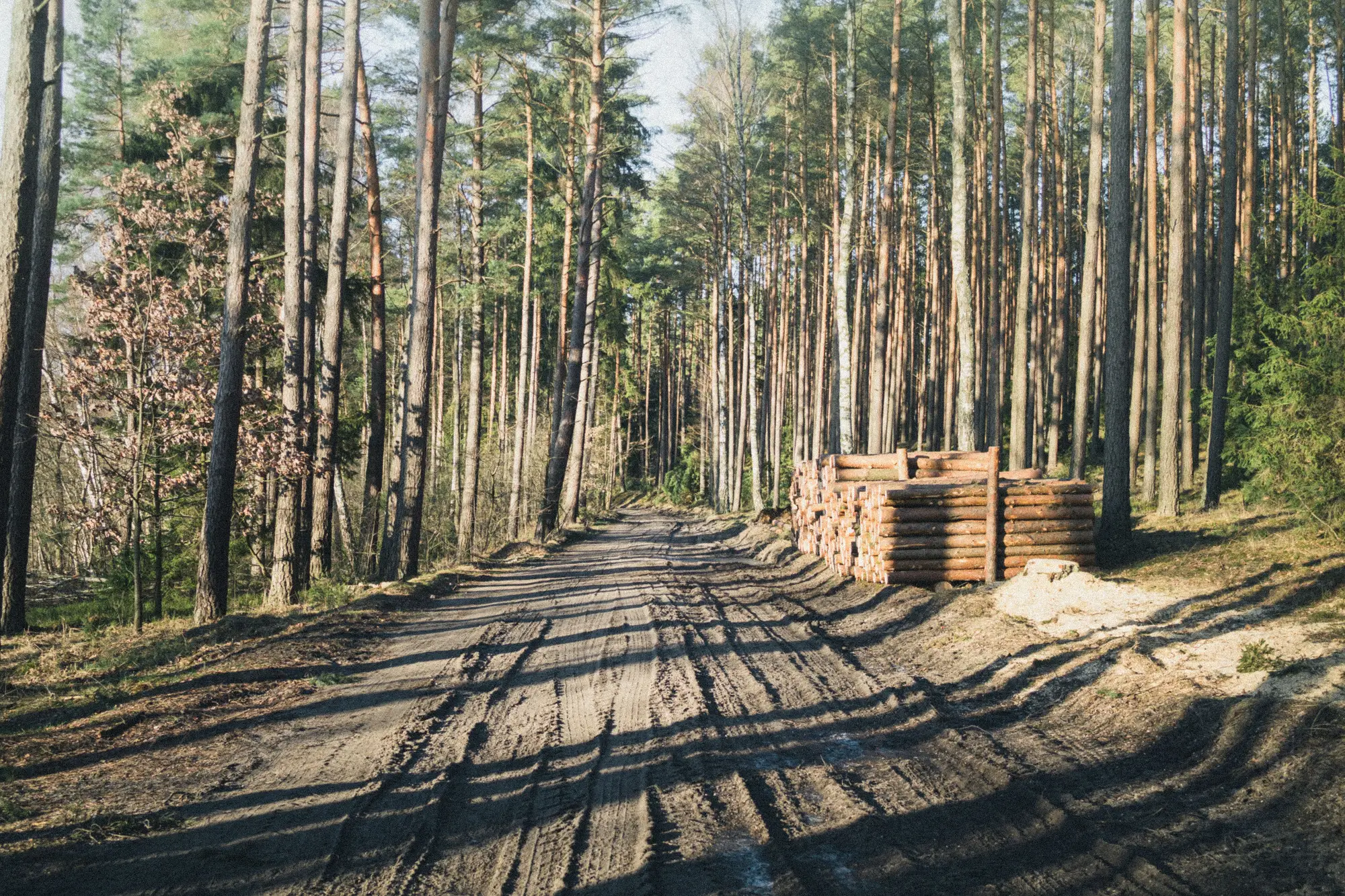
A straight scar through canopy can mean two very different things on your monitoring area, and getting it wrong in either direction costs you. Flag a seismic cutline as a logging access point and you've sent a field crew chasing a non-issue. Wave off an actual skid trail because it "looks like" a geophysical line and you've missed the early warning you were supposed to catch.
Both show up the same way on a quick pass: a thin linear feature cutting through otherwise continuous canopy, visible well before any clearing block registers. The difference is in the details, and most of them hold up even on moderate-resolution imagery.
What a seismic line actually looks like from above
Seismic cutlines exist for one purpose: running geophones and source points in a straight line across a survey grid. That purpose shows up in the geometry. They're usually dead straight or built from long, uniform segments that change direction at sharp, deliberate angles, following a pre-planned grid rather than the terrain. Vegetation is typically brushed or low-impact cleared rather than graded, so you often see a low-contrast scar, sometimes with regrowth already filling in if the line is more than a season or two old.
The other tell is what's at the ends. A cutline terminates in open ground, at a grid intersection with another line, or just stops where the survey boundary was. It doesn't connect to a landing, a mill yard, or an existing road network, because it was never built to move equipment or timber.
What a logging road or skid trail looks like instead
New logging roads and skid trails follow a different logic entirely: they're built to get machinery and logs out, so they follow the terrain rather than ignoring it. Expect curves that hug contour lines, switchbacks on steeper ground, and a width that varies along the run, wider near a planned landing, narrower where it's just a skidder track reaching into the stand. Where a cutline just ends, a logging road almost always connects to something: an existing forest road, a cleared landing, a stream crossing, or a spur that branches off toward a cut block that hasn't opened yet.
Branching itself is a strong signal. Cutlines run parallel to each other in a grid pattern when a survey block has several lines, but they don't typically throw off secondary spurs the way an access road does when crews start pushing skid trails into the timber off a main haul road. If you're looking at a single main track with thinner lines coming off it at odd angles rather than a regular spacing, that's access infrastructure, not survey geometry.
Surface condition and disturbance on either side also differ. Graded roads show up as a brighter surface in RGB imagery with hard, even edges, often with visible drainage ditching or culvert crossings at streams. Skid trails look rougher and less consistent, sometimes just compacted soil with scattered slash, and newer ones have an edge of disturbed or downed vegetation along the margins where equipment widened the path.
Why this matters for the audit trail
None of this replaces a ground check. But getting the call right from imagery first means the ground visits you do send a crew on are the ones that matter, and the pattern recognition above is most useful as a first filter on a monitoring area, not a substitute for someone walking the line. For certification bodies and enforcement teams running recurring checks over the same forest management unit, that first filter is what decides whether a field day goes to a real access point or a decade-old survey scar.
This kind of linear-feature screening is the core of what we built Logging Road Detection to do: a monthly scan that routes new track segments over your monitoring area so the distinction between a cutline and a new road gets made before clearing shows up, not after a field crew has already driven out to look.
If unpermitted access is the thing you're trying to catch early, that's worth a look.