What is a surveillance audit, and where does a monthly road alert fit?
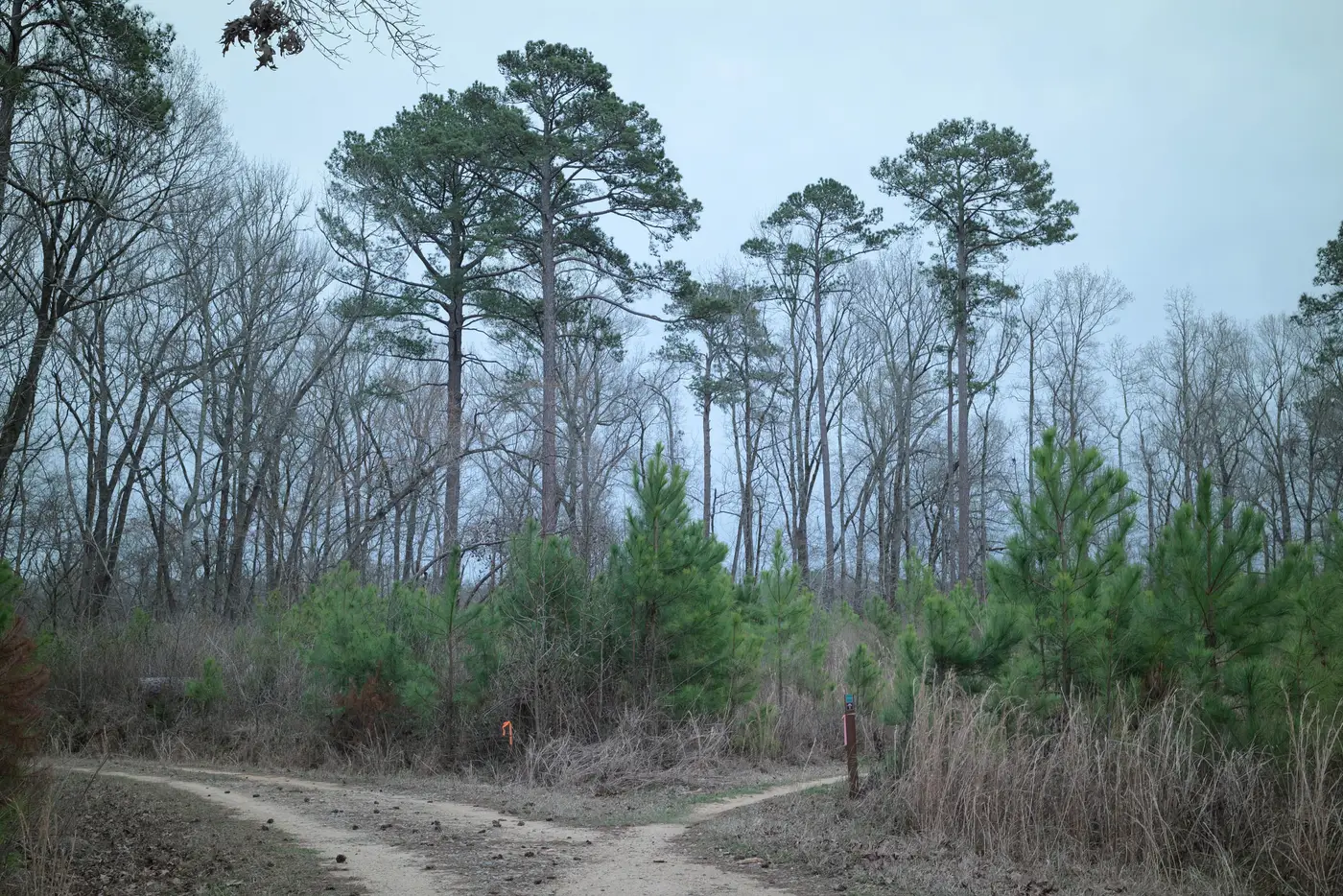
If you work around forest certification, you already know the surveillance audit isn't the big one. The main assessment happens once every five years under FSC's forest management standard; the surveillance audits fill the gaps in between, one per year, checking that the operation hasn't drifted from what got it certified in the first place.
What trips people up is the sampling. A surveillance audit doesn't cover the whole Forest Management Unit. An auditor picks a subset of stands, management units, or compartments to visit that year, based on risk, past findings, and whatever the certification body's sampling protocol calls for. Over the five-year cycle those samples are supposed to add up to reasonable coverage, but in any given year, most of the FMU simply isn't getting walked or driven.
That's the structural gap a monthly road alert is built to sit inside.
What a surveillance audit actually checks
A surveillance audit confirms the operation is still doing what its management plan and chain-of-custody documentation say it's doing. Auditors are looking at harvest records against permits, checking riparian buffers and high-conservation-value areas for encroachment, and following up on any corrective action requests (CARs) left open from the previous visit. If a prior audit flagged a minor nonconformity, say, incomplete skid trail records in a sensitive zone, the surveillance team is going to want to see whether that's been addressed or whether it's recurred.
Recurrence is the part that's hard to catch with a once-a-year visit. A skid trail or spur road cut in March and growing moss by October looks, on the ground, no different from one that's been there for years. Without a time-stamped record, an auditor walking the site in the fall has no way to know whether that access point predates or postdates the last visit. That ambiguity is exactly where a certification body loses its footing on enforcement.
Where a monthly scan fits into the annual cycle
A monthly pass over the monitoring area doesn't replace the surveillance audit. It gives the audit something to work from. Instead of relying on whatever the operator chooses to disclose, or on a single annual flyover timed to whatever season the audit lands in, the certification body has a running log of new track segments, the linear scars that show up before clearing does, logged month by month across the whole certified area, not just the sampled portion.
That matters in two concrete ways. First, between scheduled visits, a new road or spur appearing in an area that's supposed to be off-limits, a buffer zone, a steep slope, an unentered compartment, shows up as a dated segment rather than an unexplained track an auditor happens to notice six months later. Second, going into the surveillance audit itself, the certification body has a paper trail of where new access opened up over the preceding months, which helps decide where to send the sampling effort that year instead of spreading it thin across the whole FMU on guesswork.
It also changes what a CAR looks like when one gets written. "New road construction observed in riparian buffer, dated to within the monitoring interval" is a different kind of finding than "road present at time of audit, origin unclear." The first supports enforcement action. The second usually just gets noted and carried forward.
A monthly cadence, not a continuous feed
None of this requires watching the forest in real time. A surveillance audit cycle runs on a yearly rhythm already; a monthly scan matches that cadence closely enough to catch new access while it's still fresh, without pretending to be a 24/7 surveillance operation it isn't. High-resolution satellite imagery, run at roughly half-meter resolution, is enough to pick out a new skid trail or logging road as a linear feature well before the clearing behind it registers in canopy-loss monitoring. The output is a routed list of new track segments over the area a certification body or enforcement team is already watching, not a raw image dump someone has to interpret from scratch.
If you're responsible for a monitoring area between surveillance audits and want new access flagged as it appears rather than discovered on the next site visit, Logging Road Detection is built around exactly that gap. Get in touch to see where a monthly road alert would slot into your next audit cycle.